Glen Haven, Lake Michigan: Shipping Work and Lifesaving Are Different Histories
Glen Haven Historic Village at Sleeping Bear Dunes preserves several kinds of lakeshore work. NPS describes a former cordwood station that diversified into farming, canning and tourism, alongside interpretation of lifesaving. Choose a question about those changing functions rather than treating every historic building as the same maritime museum.
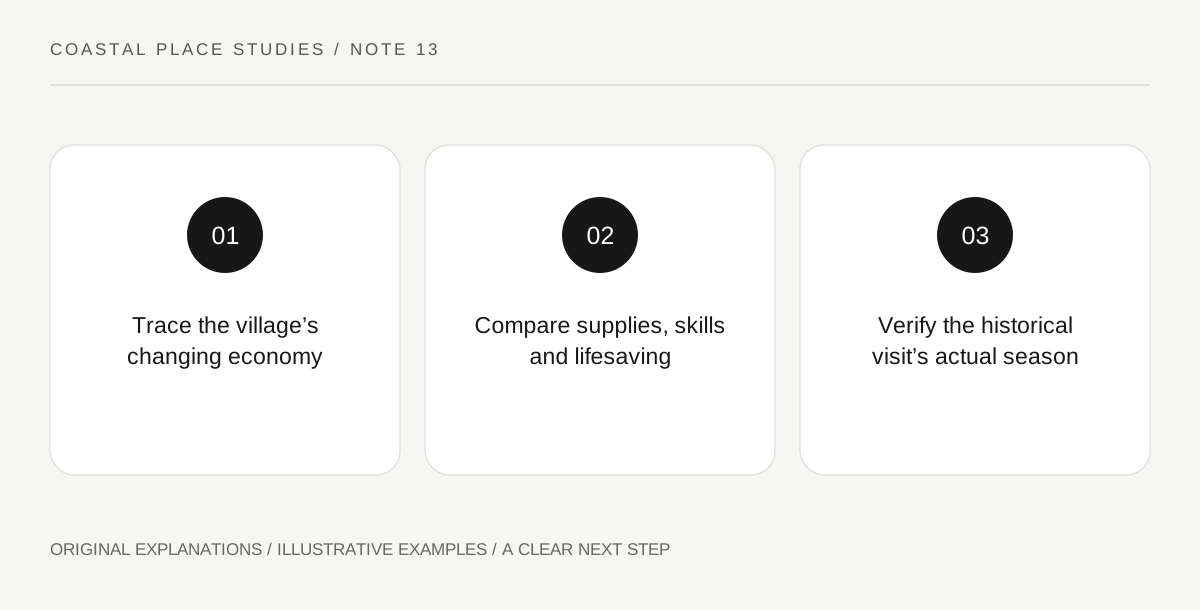
Original explanatory diagram. Read the full method and limitations below.
Start with the village’s changing economy
The NPS account identifies Glen Haven as a busy cordwood station before describing later diversification. This is a useful antidote to the impression that a quiet historic village was always quiet. Begin with the relationship between work and the Lake Michigan shore. What moved through the settlement, and which activities developed around that movement? Use interpretation for the actual sequence rather than assigning every building to the earliest phase. A short timeline can separate shipping-related work, farming, canning and tourism. The point is to recognise adaptation, not to imagine that one preserved streetscape represents an unchanging single industry.
Read a store or workshop through everyday needs
NPS identifies a general store and blacksmith interpretation among the village opportunities. These subjects connect the waterfront economy with ordinary provisioning and skilled labour. A nail-making explanation, when actually offered, can reveal a process that is easy to overlook in a finished building. A store display addresses different questions about supplies and daily life. Check the current programme rather than promising a live demonstration at every visit. If a building is unstaffed or closed, use its exterior and official interpretation honestly without claiming to have seen the interior process or spoken with a craft demonstrator.
Separate lifesaving from commercial shipping
The lifesaving interpretation addresses people who responded to maritime danger, including the work and lives of United States Life Saving Service surfmen. Their equipment and buildings belong to a different institutional function from a commercial store or cannery. A useful comparison asks how the shore supported both economic activity and emergency response. Read the labels for specific equipment rather than naming a rescue mechanism from appearance alone. A historic boathouse does not promise a present-day rescue demonstration. The value of the comparison lies in understanding different kinds of work connected with the same water, not merging them into one generic nautical atmosphere.
Check the building season separately from the beach
NPS gives a seasonal pattern for staffed historic buildings, while the wider lakeshore has other recreational opportunities. Verify the current building and programme information for the actual date. Access to sand or a nearby trail does not establish interior opening, and an open historic building does not certify water conditions. Choose one historical theme and enough time to read it. A visit can pair that theme with a permitted shore view, but the two activities retain separate checks. Record which buildings were entered, which were seen only outside and which explanations came from online material so the account remains accurate.
Illustrative work comparison
A fictional family makes three notebook headings: supplies, skilled production and lifesaving. A general-store display, an available workshop explanation and a labelled rescue-related exhibit are assigned to those headings only when actually encountered. Any closed building remains marked unvisited. The exercise does not promise a demonstration, a specific collection arrangement or a complete historic-village programme outside its current operating season.
Practical checks
Optional checkboxes save only in this browser.
Questions that come up
Are all Glen Haven buildings one museum with identical hours?
Do not assume so. NPS describes several historic functions and a seasonal staffing pattern. Check the actual buildings and programme for your date.
Does an open beach mean the historic interiors are open?
No. Shore access and staffed building operation are different questions. Verify each activity through current park information.
References and scope
These sources support the factual background. Examples and exercises are original illustrative teaching material. References do not imply endorsement.
- NPS: Glen Haven Historic Village — Changing cordwood, farming, canning and tourism economy; general store, blacksmith and lifesaving interpretation with seasonal staffing.